1. Self-Trust & Awareness
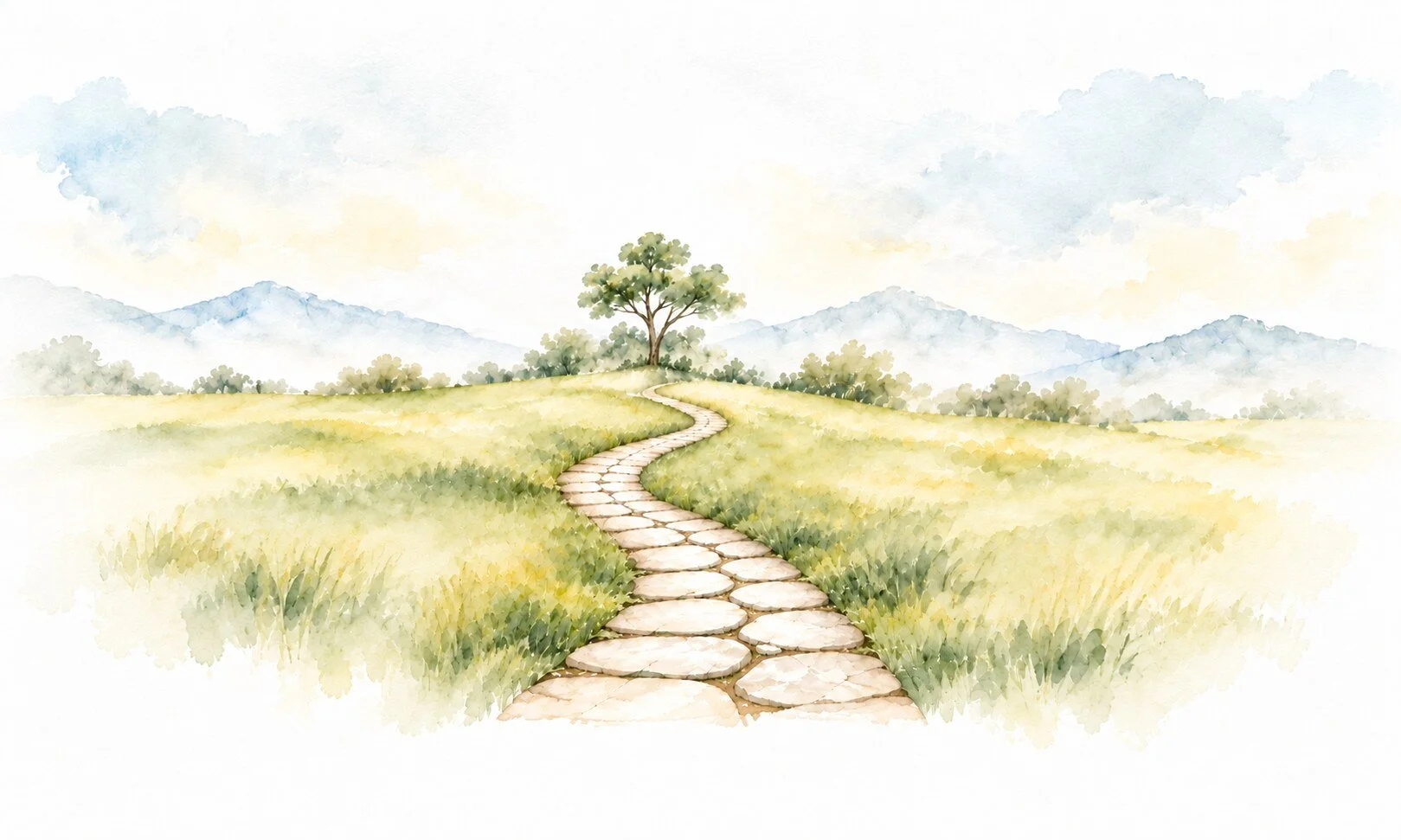
IMAGE ABOVE HEADING: Path / Stepping Stones hero banner
You do not need to have every answer to begin trusting yourself again.
When life feels overwhelming, it can become difficult to hear your own preferences, recognize your limits or feel confident in the choices you make. You may find yourself questioning decisions long after you have made them, or looking to others for reassurance before taking a next step.
Self-trust is not about always being certain. It is about developing a more attentive relationship with your own experience, so you can pause, consider what matters and respond with greater intention.
My role is to work with you, not for you. We begin with what you are noticing and explore what it may mean for you.
2. Awareness Comes Before Change
IMAGE ABOVE HEADING: Breath Line
You cannot respond to something you have not yet noticed.
Awareness involves more than observing a thought or sensation. It includes becoming curious about the patterns, expectations, environments and relationships that shape how you experience everyday life.
Rather than rushing toward a solution, we make room to explore what is happening and what choices might become available.
3. The Awareness to Alignment Process
IMAGE ABOVE HEADING: Four-stage process graphic; accessible text retained on page
A practical process for moving from awareness toward intentional response.
The Awareness to Alignment Process, developed by Natascha Polomski, offers four connected stages. It is a process for reflection and action, not a formula that promises a particular result.
NOTICE: Pay attention to what is happening within you and around you, without needing to explain or fix it immediately.
RECOGNIZE: Explore patterns, needs, influences and possible meanings in what you notice.
REGULATE: Find ways to support your capacity to pause and respond, rather than react automatically.
RE-ALIGN: Consider a next step that better reflects your needs, values, circumstances and available capacity.
These stages may overlap or be revisited. You do not have to move through them perfectly or in a fixed order.
4. The Self-Trust OS
IMAGE ABOVE HEADING: Self-Trust OS five-part graphic
Five interconnected areas that help you explore how you make choices.
The Self-Trust OS is a framework for understanding the information and influences that shape your choices. Its five parts are Signals, Direction, Intention, Capacity and Community.
SIGNALS: What you are noticing in your body, emotions, thoughts and surroundings.
DIRECTION: What matters to you and where you want to move.
INTENTION: How you choose to engage and respond.
CAPACITY: What you have available, including energy, time, resources and limits.
COMMUNITY: The relationships and environments that influence and support you.
The Self-Trust OS helps you explore what informs your decisions. The Awareness to Alignment Process helps you work with what you discover. They complement one another without being the same thing.
5. What Working Together Can Look Like
IMAGE ABOVE HEADING: Offering Hands, only if used as a destination link to Ways We Can Work Together
Conversation, reflection and practical experiences.
We may use reflective questions, everyday examples and simple awareness practices to explore overwhelm, second-guessing, boundaries and your relationship with your own experience.
The aim is not for me to decide what is right for you. It is to create circumstances in which you can consider your experience and make choices that feel more informed and intentional.
Individual guidance is available online and in person on Cape Breton Island, Nova Scotia.
BUTTON: EXPLORE WAYS WE CAN WORK TOGETHER
6. Explore at Your Own Pace
IMAGE ABOVE HEADING: Seed, used as a link to Resources & Practices
There is no single right starting point.
You may prefer to begin with a short reflective practice, read more about the ideas or ask about individual guidance. Choose what feels useful now.
These approaches are complementary and educational. They are not a substitute for medical or mental health treatment.
BUTTON: EXPLORE RESOURCES & PRACTICES
7. An Invitation
IMAGE ABOVE HEADING: Open Door, used as a destination link to How We Begin
You can begin with what you already notice.
You do not need to be certain about what you need. If you are curious about working together, we can explore what would be a useful first step.
BUTTON: HOW WE BEGIN